


Landscaping & Lawn Care Insurance in Southwest Florida
What actually goes wrong on a route
01
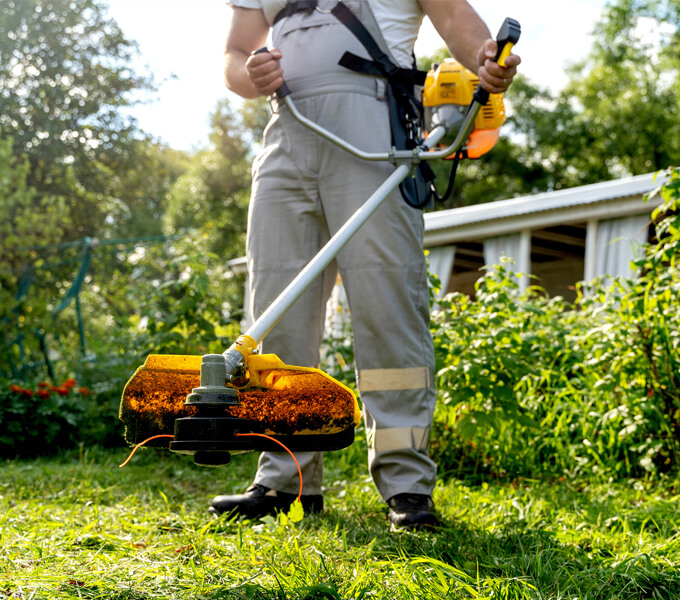
The mower throws a rock.
Into a windshield, a sliding glass door, a pool cage, or a person. It is the single most common landscaping liability claim and it is almost never expensive to insure and occasionally very expensive not to. General liability responds — but confirm your policy does not carry an exclusion for damage caused by equipment operation.
02
The chemical goes somewhere it should not.
Herbicide drifts onto a neighbor's ornamentals. A fertilizer application burns a lawn you have maintained for six years. A treatment reaches a pond or a canal. Pesticide and herbicide application is a distinct exposure and many general liability policies exclude it or require it to be scheduled and rated. If you spray, this needs to be confirmed in writing on your policy.
03
A tree job goes wrong.
Tree work is where landscaping insurance most often breaks. Many general liability policies covering lawn maintenance exclude tree trimming and removal outright, or exclude work above a stated height, or exclude anything requiring a climber or a bucket. Contractors take a storm-cleanup tree job in October assuming they are covered, and find out they were not. If you touch trees at all, tell us the height and the method.
04
The trailer disappears overnight.
Mowers, blowers, trimmers, edgers, the trailer itself. Business personal property covers what sits at your shop. Equipment that moves — on a trailer, at a job site, parked at a crew member's house overnight — needs an inland marine equipment floater with the units scheduled.
05
Somebody hits a buried line.
Irrigation trenching and install work puts you into underground utilities. A struck line can mean repair cost, service interruption to a whole street, and a claim considerably larger than the job was worth. Florida requires notification before you dig, and your documentation of having done it matters when the claim comes.
06
The truck and trailer cause a wreck.
Landscaping fleets tow constantly, often with young drivers, often in traffic. Commercial auto is usually the largest single line item on a landscaper's program, and hired and non-owned coverage matters for the crew member who runs for parts in a personal truck.
What a landscaper's program looks like
The foundation
General liability
Property damage and injury from your operations. Read the exclusions carefully for chemical application, tree work and equipment operation.
Commercial auto
Trucks, trailers, dumps, and hired and non-owned. Usually the largest premium line in this class.
Workers' compensation
Heat, blades, lifting and traffic. Florida's non-construction requirement generally begins at four employees, though some landscaping operations classify differently. Ask before you assume.
Commercial property
Shop, yard, office, materials, secured storage.
Commercial umbrella
Extra limits. HOAs, property management companies and municipal contracts increasingly require it, often at limits above one million.
What gets added on top
- Contractors equipment / inland marine floater — mowers, trailers, handhelds and attachments, scheduled by serial number
- Herbicide and pesticide applicator coverage — the endorsement or standalone that makes chemical work insurable
- Tree trimming and removal — must be specifically addressed, with height and method disclosed
- Installation floater — plants, sod, pavers, irrigation materials before they are installed and accepted
- Pollution liability — fuel storage, chemical storage and mixing, runoff
- Goods in transit — material and plants on the way to a job
- Professional liability — if you design as well as install, or make agronomic recommendations
What makes this harder in Florida
01
There is no off-season, which means there is no slow payroll either.
02
Storm cleanup is a different business than mowing.
After a hurricane, maintenance companies take debris removal, tree work and emergency clearing — bigger equipment, higher-risk tasks, sometimes subcontracted crews, sometimes work well outside the class code the policy was rated on. It is real revenue and we are not going to tell you not to take it. But call us before the season, not after the job, so the coverage and the classification match what you are actually doing.
03
Spraying requires a state license.
Commercial application of pesticides and herbicides in Florida is regulated by the Department of Agriculture and Consumer Services and requires licensing. Carriers will ask for it, and an unlicensed application is difficult to defend when it damages something. Confirm your own requirements with FDACS or with us.
04
HOAs and property managers write the requirements.
Much of the recurring commercial work in Southwest Florida runs through community associations and property management companies, and their contracts specify limits, additional insured status and sometimes umbrella. Send us the contract before you sign it. Getting the endorsement in place is easy; getting it in place the morning the crew is supposed to start is not.
What we need to quote it
No cost, no obligation. If your current program is already doing its job we will tell you that.
Current declarations pages for every policy
Loss runs, five years or as many as you have
Annual receipts, split between maintenance, install and design, irrigation, and tree work
Annual payroll and employee count, including seasonal or storm-response crews
Whether you apply chemicals, and your applicator license
Whether you do tree work, the maximum height, and whether you use climbers or a bucket
A vehicle and trailer schedule with VINs and driver list with MVRs
An equipment list with serial numbers and values
Percentage of work subcontracted, and whether those subs carry coverage
Any HOA or property management contract language you need to satisfy

Landscaping insurance questions
More commercial questions are answered on our business FAQs page.
Send us your declarations pages. We will tell you what is missing.
Three offices, one commercial team. We have written Southwest Florida green industry business since 1982, through the growing season and the cleanup that follows the storms.